Facts checked 2026-11-15.
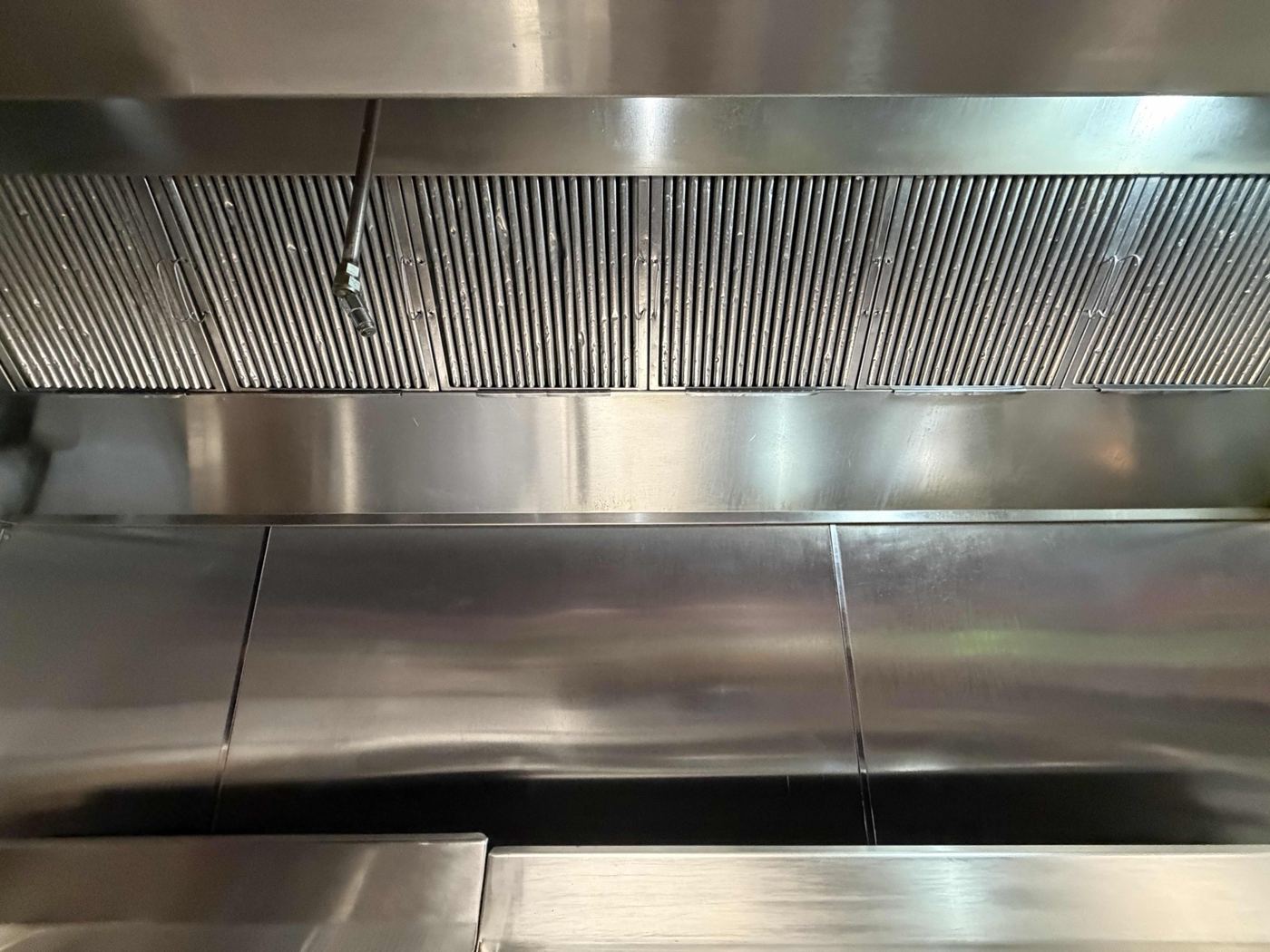
Grease builds up inside the hood, the duct and the roof fan. Florida's fire code adopts NFPA 96, which sets how often the exhaust system gets inspected and says grease deposits must be cleaned off. A request sent here goes to a hood cleaning company that serves your ZIP code.
What a cleaning covers
NFPA 96 looks at the exhaust system as one piece. A full job reaches the hood, the filters, the plenum, the duct up to the roof and the fan, including spots that are hard to reach. Filters come out to be cleaned or replaced, and the suppression system stays intact.
Signs the system needs cleaning
You may see grease dripping at the fan base or on the roof, a thick film on the filters, or a sticky coat inside the hood. A strong burnt smell or smoke that hangs in the kitchen also points to buildup. A cloudy hood with slow airflow is another clue.
Get prices for this job. Send one request and pick how many local companies quote it.
Get quotesHow often it is checked
NFPA 96 ties inspection frequency to how you cook. This schedule comes from a printed copy of the standard in the California Mechanical Code, so confirm the Florida edition with your fire marshal.
| Type of cooking | Inspect for grease buildup |
|---|---|
| Wood or charcoal | Monthly |
| High volume, such as charbroiling or wok cooking | Quarterly |
| Moderate volume | Twice a year |
| Low volume, such as a church kitchen | Yearly |
Grease found at an inspection means a cleaning. Which row describes your kitchen is the fire marshal's call.
Who is allowed to clean
We found no separate state license for hood cleaning. Florida's amendment says a trained, qualified and certified person must clean a contaminated system, and the fire marshal has to accept that person. Some fire districts post a list of accepted credentials, so ask your office before you hire.
Paperwork to expect
A cleaning should leave a service label near the access panels with the company name and date. You should also get a certificate naming the person who did the work, and a written report that lists anything not reached. A section marked as unreachable still has grease in it.
What to ask before hiring
Ask your fire marshal's office which credentials it accepts. Ask the company for certificate numbers and a sample report. Confirm that the job includes the roof fan and the whole duct, and find out what the crew will leave undone.
What to have ready when a company calls
Know how many hoods you have, what you cook and when the last cleaning happened. Clear the path to the roof and keep access panels unblocked.
Questions
How often must a Florida restaurant clean its hood and ducts?
The rule is tied to inspection: monthly for solid fuel, quarterly for high-volume cooking, twice a year for moderate volume and yearly for low volume. Any grease found must be cleaned.
Does Florida license hood cleaners?
We did not find a state hood cleaning license. The local fire marshal decides who it accepts, so ask that office before you sign anything.
What paperwork should a hood cleaning leave behind?
You should get a label near the access panels and a certificate with the company, the worker and the date. A report should list any areas that were not cleaned.
Sources
- NFPA 1 Florida amendments, 8th Edition Florida Fire Prevention Code (State Fire Marshal PDF)
- Rule 69A-3.012, adopted NFPA editions
- NFPA 96 inspection schedule as reprinted in California Mechanical Code 514.3
- West Manatee Fire Rescue, hood system maintenance letter
- Minnesota Department of Health, protection of kitchen cooking equipment